Is it really still February?

Classes have started back again in the Titan Garden and as I look around I have to wonder, is it really still February?  We just did a lesson with the kids on dormancy and as I look around, I see signs of plants breaking their dormancy all over.  The flame acanthus has tiny green buds on it, the batface cuphea is sprouting shoots from the base and the salvia are already thickening in the middle, crying out to be pruned around the woodier taller stems so they can be soft and fluffy.

And then I looked across our wildflower field, where the kids did their seed dances last fall as we played the dance music loud for them.  Cups and cups and cups of sand and seed mixture were spread across this area.  I think the kids expected them to sprout right then and there, so we had to talk more about how some things take time but they would show themselves after a winter of settling in.IMG_3538

IMG_3535


But now I see them , poking up and showing their colors.  Indian blanket, bluebonnets, mexican hat, primrose and more.  Sure, these are the early ones, over achievers in our wildflower field that are showing themselves in February.  And the kids are noticing them as well, telling me they see something different when they do their observation, asking what these flowers are that have suddenly shown themselves.  So we start talking about the names and colors, how to recognize that a bluebonnet has been pollinated, and reminding them how they all got here.

IMG_3592

It is wonderful to think that the students themselves brought these beautiful flowers to our school, with their jumping and dancing and laughing as they spread the seeds out.  The field which will be enjoyed by anyone who drives or walks by our garden for the next few months,  The kids will run through it during their garden classes, seeing bees and butterflies having just as good a time.  We will talk about native species, pollination, drought tolerance and more.IMG_3587

The kids have grown their own garden lesson which will bring us joy as well as education for months.  And then we will watch as the flowers turn to seedheads and we will have yet another lesson placed in front of us about the cycle of life and how that tiny flower produces more seeds so we can have yet another season of wildflowers next year.

IMG_3540  IMG_3539

Winter blues? Let your kids garden indoors!

It can be hard to keep kids psyched up about gardening in the winter.  Things seem kind of brown and dreary.  So we talk a lot about roots underground gearing up for spring and new growth.  But sometime, you just want to see some fresh green growth!

So today at the preschool, we had some fun bringing our garden indoors by making BIG GREEN HAIRY CATERPILLAR PLANTS!


IMG_3401

The kids and I talk a lot about what plants need- water, sunshine and a place to grow.  It’s really that simple when you get down to it and it gives the kids all they need to start a plant. So even when we can not go outside to our garden to see our veggies and plants growing, we can have a plant indoors. 

We start with a knee high pantyhose.  We fill it with dirt and shape it like a log then sprinkle seeds (I use rye grass) along the top of the log inside the pantyhose.  Then our caterpillar shaping begins.  We add eyes, mouth, and legs.  Then we put it in our tray and give it a nice bath to moisten the soil.  We make sure there is always a bit of water in the bottom so our caterpillar can continue to stay moist and allow seeds to germinate. 


IMG_3412

The kids are in charge from there on out to make sure our little plant stays moist and gets lots of sunshine by being near a window in the classroom.  In a week or two they should start seeing little green sprouts coming out of the top.  Who knows, they may even need to have a caterpillar haircut day if they care for it well enough.  And I know they’ll do great because they are fantastic gardeners. 

2012 Inside Austin Gardens Tour: Studebaker Garden

The final garden on the Inside Austin Gardens Tour that I will be previewing is Renee Studebaker’s garden.  The tour is coming up on October 20.  More information can be found at www.insideaustingardens.org

The Studebaker garden is a garden of creation and repurpose.  Renee has done a great job of incorporating many found objects that she has created new uses for in her garden, whether it be for a grape vine to climb on, a welcoming entrance to a new section of the garden or a cool spot for birds to perch.

DSC00125And Renee has created a garden that shows off its small spaces, areas to explore, sit, share a meal with friends. And by the way, all of the gardens on the tour feature small education sessions happening at scheduled times during the day. Renee Studebaker herself will be teaching a session called Grow Your Own Party Appetizers. If the amazing ratatouille she served us from her garden harvest is any indication, I would make sure you’re there for this short session. Times can be seen at www.insideaustingardens.org

DSC00127

This garden is a festival for pollinators.  I spied these two on the basil happily moving from flower to flower with plenty to go around.

DSC00140

Passion vine is always an eye catcher and this one was no exception.  Passion vine supports the gulf fritillary butterly’s life cycle. 

DSC00141

Repurposed lion’s heads greet you entering a new section of the garden. 

DSC00144

Lion’s tail offers fun texture, color and shape. 

DSC00147

And a pond with a resident Buddha offers a cool place for visitors, both birds and people.  Birds kept constantly slitting down during our visit to splash around. 

Renee Studebaker’s garden reinforced to me the idea that gardens don’t have to be huge to be useful.  And they don’t have to have a traditional feel.  But they do need to reflect a personality of the gardener- it seems that those gardens are some of the most impactful to their visitors.  And I think all of the gardens on this tour do a great job of creating that impact. 

Inside Austin Gardens Tour  sponsored by the Travis County Master Gardeners and Texas Agrilife Extension of Travis County

www.insideaustingardens.org
Date: October 20, 2012
Time: 9 am to 4 pm
Tickets for the tour (all of the gardens) are $15 in advance, or $20 on the day of the tour ($5 for individual gardens).

2012 Inside Austin Gardens Tour preview: Matthews and Doyle gardens

As I continue the preview of 5 of the gardens on the Inside Austin Gardens tour, I want to point out that there are 7 total gardens on the tour.  The two I won’t be covering are the Kastl garden and the Demonstration Garden maintained by the Travis County Master Gardeners.  Both gardens showcase wonderful example of smart gardening techniques such as Firewise considerations to minimize the risk of fire promotion by the landscape surrounding a home and water-wise gardening techniques including rainwater harvesting and drip irrigation.  More information on garden locations, tour hours and tickets can be found at www.insideaustingardens.org

When you visit the side-by-side Matthews and Doyle gardens, you’re struck by color and shapes.  Everywhere you look, bold color is utilized and shapes are carved out of the landscapes or integrated into them.  These gardens are playful and full of whimsy. Just the kind you want backing up to a school- which both do.  I can imagine those kids looking through the fences and wishing they could pay a visit. 


DSC00106

Here, a bottle tree centers the wheel-shaped garden with a Mexican bush sage performing beautifully to the side. 

DSC00107

A blue gate continues the hit of color through the garden. 

DSC00112

The colors continue in the Doyle garden with a bottle-and-everything-else tree. 

DSC00118

Geometric shapes form a path through decomposed granite in the lawnless front yard.  Rosemary creates a gorgeous edging all around this space. 


DSC00114

Fun additions like these lanterns draw your eyes up, down and all around. 

DSC00115

Stars add even more pizazz to the Doyle outdoor area. 

These two gardens play off of each other in their love for anything fun.  They are wonderful gardens to visit if you need to break out of feeling constrained by normal gardening techniques and design.  You can’t help but want to add a bit more color and fun to your own garden once you explore all the inspiration these two gardens have to offer. 

Inside Austin Gardens Tour  sponsored by the Travis County Master Gardeners and Texas Agrilife Extension of Travis County

www.insideaustingardens.org
Date: October 20, 2012
Time: 9 am to 4 pm
Tickets for the tour (all of the gardens) are $15 in advance, or $20 on the day of the tour ($5 for individual gardens).

Inside Austin Gardens Tour 2012: Phillips Garden

This week, I saw a preview of the Inside Austin Gardens Tour sponsored by the Travis County Master Gardeners in cooperation with Texas AgriLife Extension of Travis County.  The tour is coming up on October 20.  More information and tickets can be found at www.insideaustingardens.org

The second garden we saw on the tour was the Phillips garden.  This was such a great garden to see because to me it rambled through the landscape, taking heed that it was out in forested land, but also tamed some areas to work for the owners such as the vegetable garden area.  But the materials looked as if they had just been reshaped from the landscape, which many of them no doubt had been.


What at first looked to be just a dry stream bed actually was a water feature which the owner could turn on and run water through in dryer times for the aesthetic and for the positive addition to the habitat.  Native perennials dotted themselves along the rockwork, softening the hardscape.

Once we were past the entrance area, we entered in through a wonderful gate covered with snail ivy mixed in the blue sky vine and were greeted by a landscape of galvanized feeder raised beds with a variety of edibles growing in them.  The look was minimal so that it was functional but still went well with the surroundings.  All of the raised beds are fed by drip irrigation.

I liked the aesthetics that the owner had selected, mixing the textures and looks of metal, wood and rock with the foliage of perennials and annuals.  This garden speaks strongly to the hill country style of gardening where you don’t try to reclaim and tame your natural surroundings.

Inside Austin Gardens Tour  sponsored by the Travis County Master Gardeners and Texas Agrilife Extension of Travis County

www.insideaustingardens.org
Date: October 20, 2012
Time: 9 am to 4 pm
Tickets for the tour (all of the gardens) are $15 in advance, or $20 on the day of the tour ($5 for individual gardens).

Inside Austin Gardens Tour 2012: Williams’ Garden

The Inside Austin Gardens Tour is fast approaching on October 20th.  Sponsored by the Travis County Master Gardeners, this tour is near and dear to me because…well, I’m a Master Gardener and I try and do my part every year to help shape a great tour.  These aren’t the highly manicured gardens that you might see on other tours where you sigh and dream of what you could do with a million dollars, a professional landscape designer and a gardener on staff to pull any leaf which might look out of place.  I ‘m always intrigued because the gardens on the IAGT are so accessible in terms of design but also inspiring in the way that each reflects the vision and personality of their owner.

I got a sneak peek of the gardens ahead of the tour and wanted to share them with you.  The post today will look at Carolyn and Michael Williams’ garden.  Carolyn is a Master Gardener, rose lover, grandmother, and has deep ties to Central Texas.  And I can see all of these things reflected in her garden.  She has transformed what was lawn and lots of shade into lovely roaming pathways with plant mixtures that blend naturally.
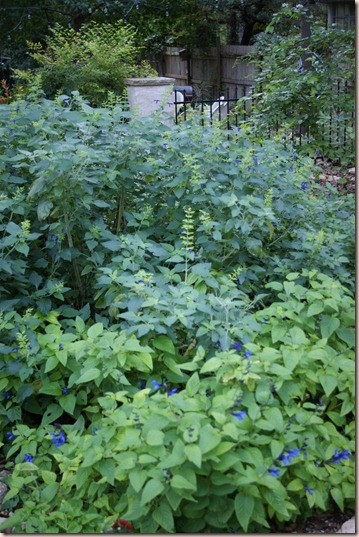
DSC00074Here, we see a beautiful blue sage blooming but it is the blues and greens of the foliage that really stand out.  These plants border an herb wheel in Carolyn’s garden.  I love the hardscape and how it breaks up the garden into sections and I am a big fan of special herb spaces like herb wheels and spirals.
DSC00076

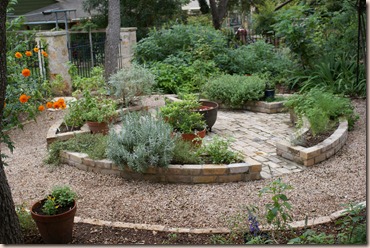
Here’s a shot of the herb wheel- beautiful in its simplicity.
DSC00075

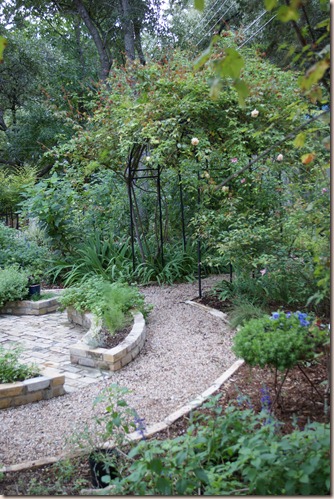
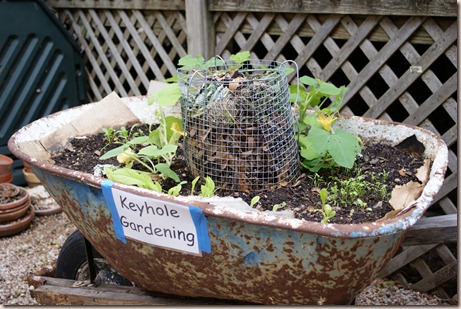
The herb wheel path leads right under a trellis with a climbing rose.  Carolyn has also featured, for fun with her grandkids, a wheelbarrow where she has built a keyhole garden.  For those who don’t know, keyhole gardening is where you build a garden- usually circular in shape with a wedge shape cut out- and then have a small compost pile held by wire plopped right in the center.  By placing compostable materials there and watering through, the garden is both watered and leeches nutritional goodness through this compost basket.  Carolyn has created a very cute version in a wheelbarrow and she says her grandkids love to take care of it.
DSC00079

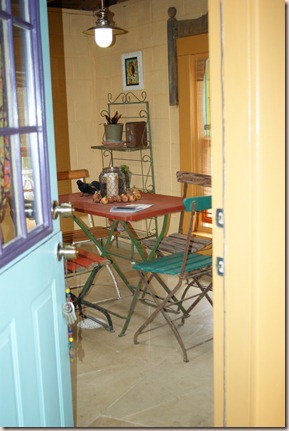
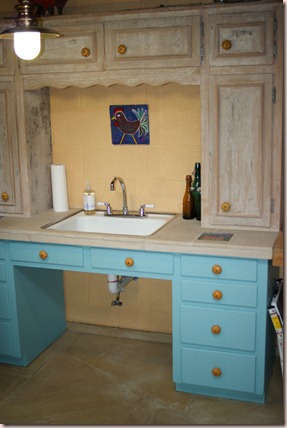
Carolyn has also converted an old shed on the property into an outrageously cute garden cottage. Her grandkids must love it and I could just imagine them having their garden treats in there. But it also serves as her garden work area with running water and a work table.
DSC00080

DSC00081DSC00082

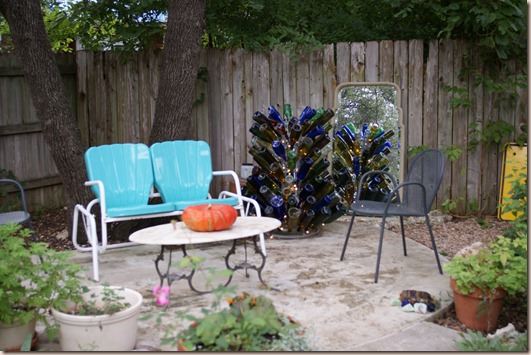
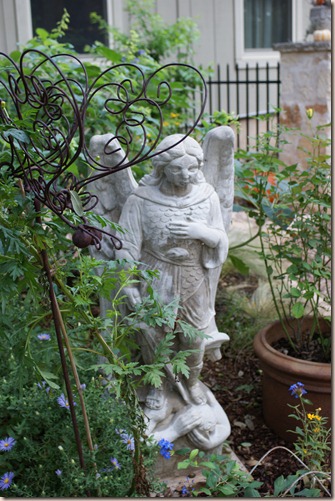
Along with other charming touches, Carolyn has a bottle tree (bottle bush?) positioned to perfectly reflect in a mirror and multiple statues including St. Michael and St. Francis.
DSC00087DSC00090

Carolyn has beautiful choices in plants and some very creative touches, including an insectary area stocked with plants specifically chosen to attract insects to her garden.  This garden is stocked full of ideas that will give inspiration to the tour visitors.

Inside Austin Gardens Tour  sponsored by the Travis County Master Gardeners and Texas Agrilife Extension of Travis County

www.insideaustingardens.org
Date: October 20, 2012
Time: 9 am to 4 pm
Tickets for the tour (all of the gardens) are $15 in advance, or $20 on the day of the tour ($5 for individual gardens).

The hardest season I know…

This time of year is my favorite.  I’ve always been a fall weather girl.  I like the colors in nature and in fashion.  I love the cooler weather.  And cozying up with soups and stews is right up my alley.  But it is also the hardest season of the year for me.  The warm season vegetable garden is not only hanging on but much of it is downright gorgeous right now and the cooler season vegetables need to go in.  So where do you draw the line?  When is it time to call it quits on warm and move to cool?

And that’s where I have trouble.  I HATE pulling out anything that is alive.  At the school garden the other day, I physically could not pull out a tomato plant that was still alive.  I had to ask another volunteer to do it for me.  She just laughed, counted down and yanked it out.  I had hemmed and hawed for weeks about whether I should do that.  But here we had it, an empty patch of dirt now just waiting for the lettuce seeds to be planted by lots of tiny hands.  A perfect time to plan to give them warmth and moisture with no danger of frost. 

DSC00012

But I am determined to become better at it, watch the calendar, not hang onto things because the might still produce.  Make way for better things and start my seasons off strong.  And why not, if it gives me fresh lettuce for my salad to accompany that delightful chilly day pot roast!